 All The Babes
Career
Active 1922 – 1931
Biography
About Corliss Palmer
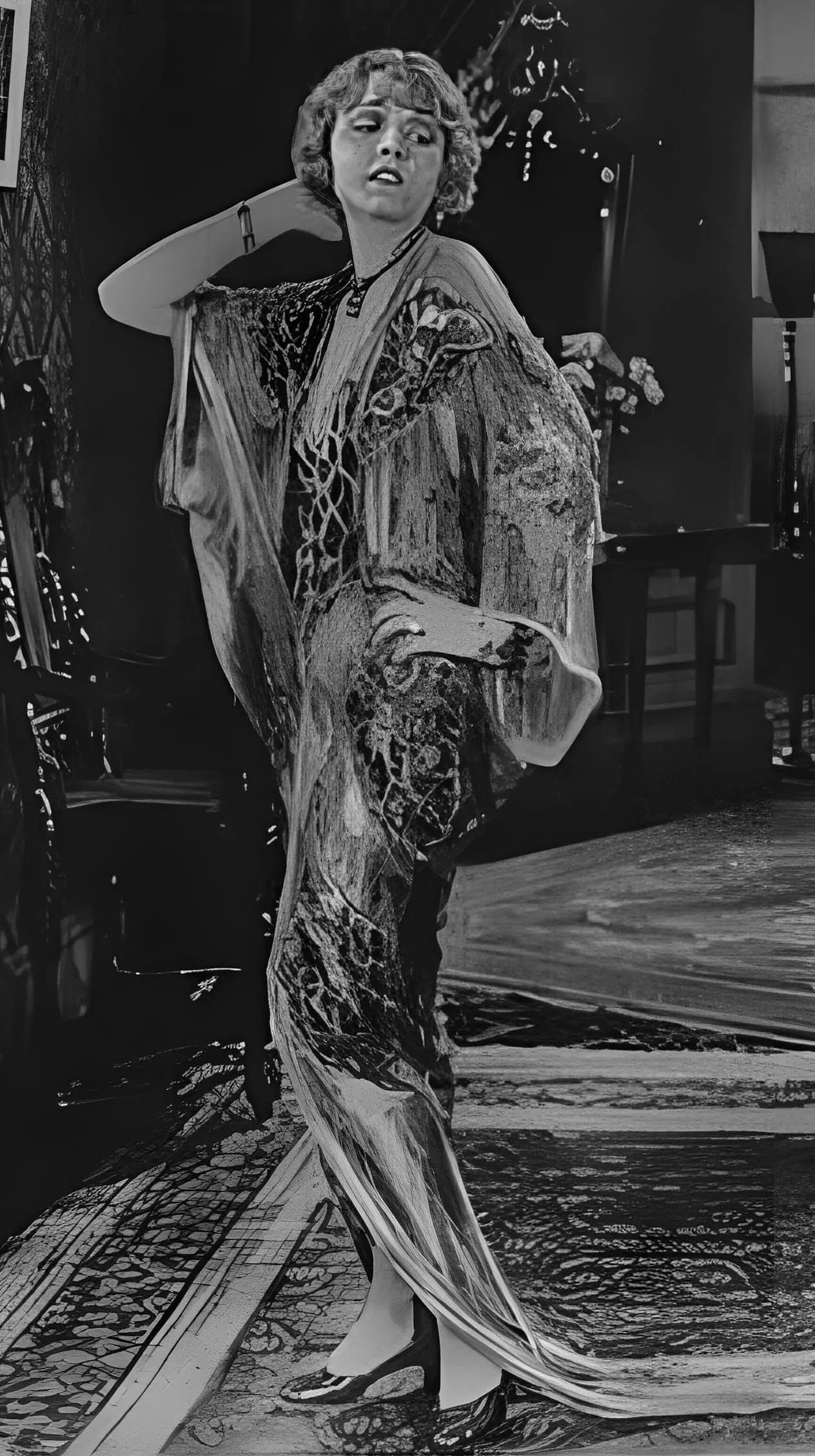
Corliss Palmer was an American actress whose career in silent and early sound films was as turbulent as her personal life. Born Helen Caroline Palmer in Edison, Georgia, she was one of six children and lost her father when she was ten. After high school, she worked at a grocery store and a movie theater in Macon before her life changed in 1920 when Motion Picture Magazine named her "the most beautiful girl in America."
Moving to Hollywood, she made her film debut in the 1922 short From Farm to Farm. Her affair with Eugene V. Brewster, the married publisher of Motion Picture Magazine, helped her career, as he promoted her in his publication and secured endorsements for her. Yet despite the publicity, she did not land another role until 1926, when she appeared in Her Second Chance with Anna Q. Nilsson. When Brewster filed for divorce, his wife sued Corliss for alienation of affection. Corliss married Eugene in December 1926, becoming his third wife, and they lived in a palatial California estate. The dazzling redhead then took supporting roles in A Man's Past, The Noose, and Into the Night, but her promising career soon stalled.
Her final film was the 1931 comedy Honeymoon Lane, released as her husband's lavish spending drove him into bankruptcy. Corliss left him and began an affair with married film writer Albert J. Cohen, whose wife also sued for alienation of affection in 1932. By then, Corliss was struggling with a serious drinking problem. She made headlines in 1933 when she caused a scene at a hotel and was hospitalized for a nervous breakdown. She later took low-paying jobs, including demonstrating makeup at a cosmetics counter, and remarked, "At heart I'm really a domestic sort of girl. I wasn't made for all this stuff I've been through." In 1939 she married William Taylor, a former rodeo performer, but her alcoholism worsened and her mental health deteriorated. She entered a psychiatric hospital in 1950, diagnosed with "alcoholic psychosis," and died on August 27, 1952, at the age of fifty-three. Corliss was buried in an unmarked grave at Woodlawn Cemetery in Santa Monica, California, until her fans later paid for a headstone. Her story remains a cautionary tale of early Hollywood fame and its costs.
Record
Profile details
Personal
- Died
- Wednesday 27th of August 1952 (age 53)
- Years Active
- 1922-1931 (started around 22 years old; 9 years active)
- Birthplace
- United States
- Ethnicity
- Caucasian
- Sexuality
- Straight
Frequently asked
How did Corliss Palmer get her start in Hollywood?
She won a contest sponsored by Motion Picture Magazine in 1920 and was named "the most beautiful girl in America," which led to her move to Hollywood and her film debut in the 1922 short From Farm to Farm.
Why did Corliss Palmer's career stall after its early success?
Despite her early publicity and roles in dramas like A Man's Past, The Noose, and Into the Night, her career stalled; after her final film in 1931, Honeymoon Lane, she faced personal troubles including a drinking problem and legal issues from affairs with married men.
What legal troubles did Corliss Palmer face?
She was sued for alienation of affection by the wives of two married men she had affairs with: Eugene V. Brewster's wife and Albert J. Cohen's wife, the latter in 1932.
Did you know
- Corliss Palmer was born Helen Caroline Palmer and was one of six siblings.
- Her first film role came in the 1922 short From Farm to Farm, but her next role did not come until 1926.
- She married Eugene V. Brewster, the married publisher of Motion Picture Magazine, in December 1926.
- After her career ended, she worked demonstrating makeup at a cosmetics counter.
- She was buried in an unmarked grave, but her fans later paid for a headstone.
More American Actress profiles





Help improve this profile
Spot something wrong or missing? Fix a detail, add a link, or share a fact. Every submission is reviewed before it goes live.
Are you Corliss Palmer?